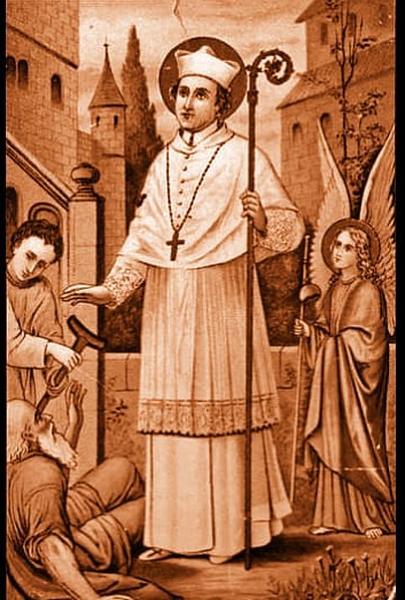
Saint Gilbert of Sempringham was born into a wealthy family, but he followed a path quite different from that expected of him as the son of a Norman knight. Sent to France for his higher education, he decided to pursue seminary studies.
He returned to England not yet ordained a priest, and inherited several estates from his father. But Gilbert avoided the easy life he could have led under the circumstances. Instead he lived a simple life at a parish, sharing as much as possible
with the poor. Following his ordination to the priesthood he served as parish priest at Sempringham.
Among the congregation were seven young women who
had expressed to him their desire to live in religious life. In response, Saint Gilbert of Sempringham had a house built for them adjacent to the Church. There they lived an austere life, but one which attracted ever more numbers; eventually lay sisters and lay brothers were added to work the land.
The religious order formed eventually became known as the Gilbertines, though Gilbert had hoped the Cistercians or some other existing order would take on the responsibility of establishing a rule of life for the new order. The Gilbertines, the only religious order of English origin founded during the Middle Ages, continued to thrive. But the order
came to an end when King Henry VIII suppressed all Catholic monasteries.
Over the years a special custom grew up in the houses of the order called “the
plate of the Lord Jesus.” The best portions of the dinner were put on a special plate and shared with the poor, reflecting Saint Gilbert of Sempringham’s lifelong concern for less fortunate people.