|
|
Forum on Christianity and Spirituality
February 5, 2026: 7:30 p.m. CST Topic: Sharing by group: meaningful books. See https://shalomplace.com/inetmin/forum.html for more information and registration. __________
Doubts are the messengers of the Living One to the honest. They are the first knock at our door of things that are not yet, but have to be understood…Doubt must precede every deeper assurance; for uncertainties are what we first see when we look into a region hitherto unknown, unexplored, unannexed.
-
George Macdonald
What doubts are you struggling with these days? How might they be invitations to deeper seeking . . . trusting . . . surrendering? |
Daily Readings
1 Kings 2:1-4, 10-12
1 Chronicles 29:10, 11ab, 11d-12a, 12bcd Mark
6:7-13 Jesus made a tour round the villages, teaching. Then he summoned the Twelve and began to send them out in pairs giving them authority over the unclean spirits. And he instructed them to take nothing for the journey except a staff – no bread, no haversack, no coppers for their purses. They were to wear sandals but, he added, ‘Do not take a spare tunic.’ And he said to them, ‘If you enter a house anywhere, stay there until you leave the district. And if any place does
not welcome you and people refuse to listen to you, as you walk away shake off the dust from under your feet as a sign to them.’ So they set off to preach repentance; and they cast out many devils, and anointed many sick people with oil and cured them.
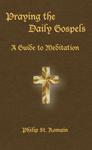
Praying the Daily Gospels: A Guide to Meditation, by Philip St. Romain, 2018 (3rd ed.) Mark 6: 7-13 (The Twelve sent
out) It is important to note that Jesus sends the apostles out in pairs. From the beginning, the importance of support in ministry has been emphasized, as well as traveling light, free from unnecessary burdens. Simplicity of lifestyle and fellowship in community remain important values for Christians. • Do you have a simple lifestyle? What
adjustments do you feel are necessary so that you might experience the freedom that the simple life offers? • Do you have the support you need to minister in your daily life? Pray for the grace to experience support from friends
Treatise on the Love of God, by St. Francis de Sales (1567-1622) ____________ BOOK VI: OF THE EXERCISES OF LOVE IN PRAYER Chapter 13: Of the wound of love.
All these terms of love are drawn from the resemblance there is between the affections of the mind and the
passions of the body. Grief, fear, hope, hatred, and the rest of the affections of the soul, only enter the heart when love draws them after it. We do not hate evil except because it is contrary to the good which we love: we fear future evil because it will deprive us of the good we love. Though an evil be extreme yet we never hate it except in so far as we love the good to which it is opposed. He who does not much love the commonwealth is not much troubled to see it ruined: he who scarcely
loves God, scarcely also hates sin. Love is the first, yea the principle and origin, of all the passions, and therefore it is love that first enters the heart; and because it penetrates and pierces down to the very bottom of the will where its seat is, we say it wounds the heart. "It is sharp," says the apostle of France, [304] "and enters into the spirit most deeply." The other affections enter indeed, but by the agency of love, for it is this which piercing the heart makes a passage for them.
It is only the point of the dart that wounds, the rest only increases the wound and the pain.
Now, if it wound, it consequently gives pain. Pomegranates, by their vermilion colour, by the multitude of their seeds, so close set and ranked, and by their fair crowns, vividly represent, as S. Gregory says, most holy charity, all red by reason of its ardour towards God, loaded with all the variety of virtues, and alone bearing away the crown of eternal rewards: but the juice
of pomegranates, which as we know is so agreeable both to the healthy and to the sick, is so mingled of sweet and sour that one can hardly discern whether it delights the taste more because it has a sweet tartness or because it has a tart sweetness. Verily, Theotimus, love is thus bitter-sweet, and while we live in this world it never has a sweetness perfectly sweet, because it is not perfect, nor ever purely satiated and satisfied: and yet it fails not to be of very agreeable taste, its
tartness correcting the lusciousness of its sweetness, as its sweetness heightens the relish of its tartness. But how can this be? You shall see a young man enter into a company, free, hearty, and in the best of spirits, who, being off his guard, feels, before he goes away, that love, making use of the glances, the gestures, the words, yea even of the hair of a silly and weak creature, as of so many darts, has smitten and wounded his poor heart, so that there he is, all sad, gloomy and
depressed. Why I pray you is he sad? Without doubt because he is wounded. And what has wounded him? Love. But love being the child of complacency, how can it wound and give pain? Sometimes the beloved object is absent, and then, my dear Theotimus, love wounds the heart by the desire which it excites; this it is which, being unable to satiate itself, grievously torments the spirit.
|
|
|