Of this at least I am certain, that no one has ever died who was not destined
to die some time. Now the end of life puts the longest life on a par with the shortest… And of what consequence is it what kind of death puts an end to life, since the one who has died is not forced to go through the same ordeal a second time? … They, then, who are destined to die, need not be careful to inquire what death they are to die, but into what place death will usher them.
- St. Augustine of Hippo (354-430), The City of God Learn to make friends with death. Recall each day that both life and death belong to Christ, and if you belong to him in life, you will belong to Him in death.
|
2 Samuel
7:4-17
Psalm 89:4-5, 27-28, 29-30 Mark 4:1-20 Jesus began to teach by the lakeside, but such a huge crowd gathered round him that he got into a boat on the lake and sat there. The people were all along the shore, at the water’s edge. He taught them many things in
parables, and in the course of his teaching he said to them, ‘Listen! Imagine a sower going out to sow. Now it happened that, as he sowed, some of the seed fell on the edge of the path, and the birds came and ate it up. Some seed fell on rocky ground where it found little soil and sprang up straightaway, because there was no depth of earth; and when the sun came up it was scorched and, not having any roots, it withered away. Some seed fell into thorns, and the thorns grew up and choked it, and
it produced no crop. And some seeds fell into rich soil and, growing tall and strong, produced crop; and yielded thirty, sixty, even a hundredfold.’ And he said, ‘Listen, anyone who has ears to hear!’
When he was alone, the Twelve, together with the others who formed his company, asked what the parables meant. He told them, ‘The secret of the kingdom of God is given to you, but to those who are outside everything comes in parables, so that they may see and see again, but not perceive;
may hear and hear again, but not understand; otherwise they might be converted and be forgiven.’
He said to them, ‘Do you not understand this parable? Then how will you understand any of the parables? What the sower is sowing is the word. Those on the edge of the path where the word is sown are people who have no sooner heard it than Satan comes and carries away the word that was sown in them. Similarly, those who receive the seed on patches of rock are people who, when first they hear
the word, welcome it at once with joy. But they have no root in them, they do not last; should some trial come, or some persecution on account of the word, they fall away at once. Then there are others who receive the seed in thorns. These have heard the word, but the worries of this world, the lure of riches and all the other passions come in to choke the word, and so it produces nothing. And there are those who have received the seed in rich soil: they hear the word and accept it and yield a
harvest, thirty and sixty and a hundredfold.’
Reflection on the Scriptures
Today’s gospel includes the parable of the soils, which our Lord himself explains so that his disciples will understand. The soils give us types or examples along with the outcomes (legacies) they produce. The quality of soil develops over
eons and is resistant to change, but we can affect the growing conditions in our own lives. We can also recognize our need for help and cooperate in receiving it. All of us can use some spiritual weeding to root out the effects of sin, along with some organic matter to help break up the hardness wrought by our own stubbornness. These helps come to us through grace and divine mercy, but we must cooperate to bring them to fruition. The waters of our baptism start this process. In short, we need
the Church. This is not a quick fix from a self-help guru, but a lifetime project of growth in love. Our choices matter in this world, but the end result may not be ours to determine. -by Edward Morse
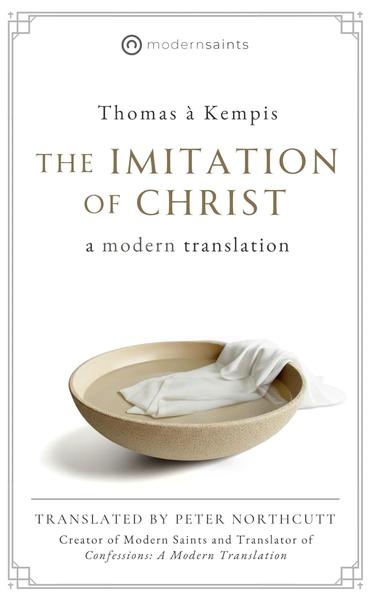
The Imitation of Christ, Thomas A. Kempis https://amzn.to/40FrikB Paperback and Kindle versions available BOOK
ONE: Thoughts Helpful in the Life of a Soul
The Thirteenth Chapter: Resisting Temptations
Some suffer great
temptations in the beginning of their conversion, others toward the end, while some are troubled almost constantly throughout their life. Others, again, are tempted but lightly according to the wisdom and justice of Divine Providence Who weighs the status and merit of each and prepares all for the salvation of His elect.
We should not despair, therefore, when we are tempted,
but pray to God the more fervently that He may see fit to help us, for according to the word of Paul, He will make issue with temptation that we may be able to bear it. Let us humble our souls under the hand of God in every trial and temptation for He will save and exalt the humble in spirit.
|
|