Spiritual Growth Resource
|
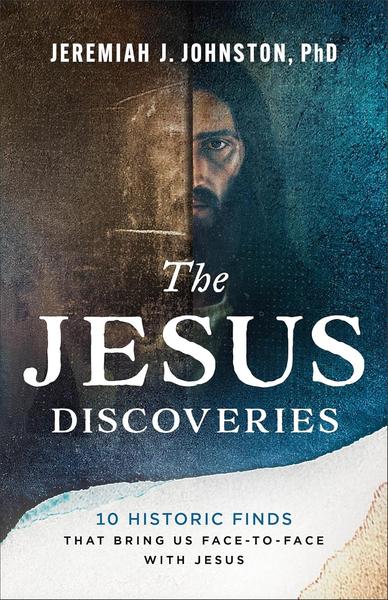
The Jesus Discoveries: 10 Historic Finds That Bring Us Face-to-Face with Jesus. by Jeremiah J. Johnston. Bethany
House Publ., 2026. In an age of growing skepticism, many demand hard evidence before believing anything is true--especially when it comes to
Jesus and the Bible. A kind of "artifacts or it didn't happen" attitude. Perhaps nowhere is this attitude more prevalent than when considering the claims of Christianity. The irony of this is that there are centuries of archaeological discoveries that support the narratives found in the Bible. Lost cities and civilizations, found. Lost art and technology, rediscovered. Lost documents, retrieved.
Okay, fine, the skeptic says. I'll give you
cities and art. But what about Jesus? There's no actual evidence that he ever lived, right? Wrong.
In this eye-opening, faith-fortifying book from acclaimed New Testament scholar and minister Jeremiah Johnston, you'll encounter ten of the most compelling historic finds that corroborate the truth claims found in the Bible regarding who Jesus said he was, when and where He lived, His claims and aims, how His life ended, and how that wasn't
the end of His story. Far more than a tour of the past, The Jesus Discoveries connects His story with your story, perhaps in ways you've never before considered--revealing how Jesus's story changes your story.
|
|
|
Make the Christian Spirituality Bookstore your starting point for online shopping at Amazon.com. You can buy books, cds, videotapes, software, appliances and many other products at discount
prices. As Amazon.com affiliate, we are paid a small fee for purchases originating from our web site. Every little bit helps! http://shalomplace.com/psrbks.html
|
|
St. Benedict Joseph Labre. April 17. 1748 - 1783.
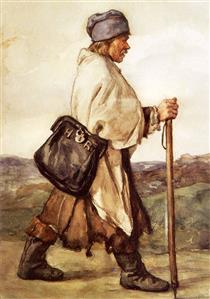
Benedict Joseph Labre was truly eccentric, one of God’s special little ones. Born in France and the eldest of 18 children, he studied under his uncle, a parish priest. Because of poor health and a lack of suitable academic preparation he was unsuccessful in his attempts to enter the religious life. Then, at age 16, a profound change took
place. Benedict lost his desire to study and gave up all thoughts of the priesthood, much to the consternation of his relatives.
He became a pilgrim,
traveling from one great shrine to another, living off alms. He wore the rags of a beggar and shared his food with the poor. Filled with the love of God and neighbor, Benedict had special devotion to the Blessed Mother and to the Blessed Sacrament. In Rome, where he lived in the Colosseum for a time, he was called “the poor man of the Forty Hours devotion” and “the beggar of Rome.” The people accepted his ragged appearance better than he did. His excuse to himself was that “our comfort is not in
this world.” On April 16, 1783, the last day of his life, Benedict dragged himself to a church in Rome and prayed there for two hours before he collapsed,
dying peacefully in a nearby house. Immediately after his death, the people proclaimed him a saint.
|
|
|
|