Sometimes, when the soul least thinks of it, and when it least desires it, God touches it divinely causing certain recollections of Himself. ... St. John of the Cross (1542-1591)
Be alert for these special touches today.
Readings of the Day
Wisdom 2:1a, 12-22 Psalm 34:17-18, 19-20, 21 and 23
John 7:1-2, 10, 25-30
Jesus stayed in Galilee; he could not stay in Judaea, because the Jews were out to kill him. As the Jewish feast of Tabernacles drew near, after his brothers had left for the festival, he went up as well, but quite privately, without drawing attention to himself. Meanwhile some of the people of Jerusalem were saying, ‘Isn’t this
the man they want to kill? And here he is, speaking freely, and they have nothing to say to him! Can it be true the authorities have made up their minds that he is the Christ? Yet we all know where he comes from, but when the Christ appears no one will know where he comes from.’ Then, as Jesus taught in the Temple, he cried out: ‘Yes, you know me and you know where I came from. Yet I have not come of myself: no, there is one who sent me and I really come from him, and
you do not know him, but I know him because I have come from him and it was he who sent me.’ They would have arrested him then, but because his time had not yet come no one laid a hand on him.
We cannot be indifferent to the claims which Jesus makes on us. We are either for him or against him. There is no middle ground. We can try to mold the Lord Jesus to our own ideas and way of thinking or we can allow his word of truth to free us from our own sinful blindness, stubborn pride, and
ignorance. Do you accept all that Jesus has taught and done for you with faith and reverence or with disbelief and contempt? The consequences are enormous, both in this life and in eternity.
Eternal God, who are the light of the minds that know you, the joy of the hearts that love you, and the strength of the wills that serve you; grant us so to know you, that we may truly love you, and so to love you that we may fully serve you, whom to serve is perfect freedom, in Jesus
Christ our Lord.
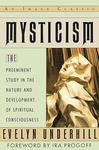
Mysticism: A Preeminent Study in the Nature and Development of Spiritual Consciousness
By Evelyn Underhill
(I am not able to modify the non-inclusive language in this work.
Phil)
Part One: The Mystic Fact
Chapter One: The Point of Departure
- selected quotes -
Of all those forms of life and thought with which humanity has fed its craving for truth, mysticism alone postulates, and in the persons of its great initiates proves, not only the existence of the Absolute, but also this link: this possibility first of knowing, finally of attaining it.
It denies that possible knowledge is to be limited (a) to sense impressions, (b) to any process of intellection, (c) to the unfolding of the content of normal consciousness. Such diagrams of experience, it says, are hopelessly incomplete. The mystics find the basis of their method not in logic but in life: in the existence of a discoverable “real,” a spark of true being, within the seeking subject, which can, in that ineffable experience which they call the “act of union,” fuse itself with and
thus apprehend the reality of the sought Object. In theological language, their theory of knowledge is that the spirit of man . . . is capable of immediate communion with God, the One Reality.
In mysticism that love of truth which we saw as the beginning of all philosophy leaves the merely intellectual sphere, and takes on the assured aspect of a personal passion. Where the philosopher guesses and argues, the mystic lives and looks; and speaks, consequently, the disconcerting
language of first-hand experience, not the neat dialectic of the schools. Hence whilst the Absolute of the metaphysicians remains a diagram—impersonal and unattainable—the Absolute of the mystics is lovable, attainable, alive.
Methods of Prayer and Reflection
Listed below are several traditional methods of prayer and reflection. As St. Frances de Sales noted, we learn to pray by praying, but it is also good to try different methods to see which seem to help facilitate connection with God. Indeed, the more we learn different methods, the better we can sense how the Spirit is moving us to pray for any given prayer
time.
First, you
choose a passage of Scripture that you will pray with. It might be the Gospel reading used in the liturgy of the day, or anything else you want. The process then follows these steps:
Reading (lectio) After settling in and quieting yourself,read the passage slowly, prayerfully. Just let it sink in for a minute or two, then read it
a second time, paying closer attention to the words or phrases that speak to you.
Reflecting (meditatio) What do you hear God saying to you in this passage? What words or phrases caught your attention?
Responding (oratio) What do you want to say to God in response to what you've heard? Here you can also voice your prayers of petition, remorse, thanksgiving, praise, and so forth. If you sense God speaking to you in your thoughts, feelings or imagination, you respond as you would in any conversation.
Resting (contemplatio) If, at any time, you feel drawn to simply rest in the awareness of God's loving presence, you let yourself do so. Remain in loving silence as long as you feel comfortable, perhaps using a simple word or phrase from the Scripture passage to help deepen your openness to rest in God (see Centering Prayer method,
below)
(Works best after a period of Lectio Divina, as described above; two 20 minute periods a day are recommended.)
This term, centering prayer, is of recent origin, but the method is described in many places, most notably The Cloud of Unknowing.
1. Choose a sacred word as the symbol of your intention to consent to God's
presence and action within. (This can be any word.)
2. Sitting comfortably and with eyes closed, settle briefly, and silently introduce the sacred word as the symbol of your consent to God's presence and action within.
3. When you become aware of thoughts, return ever-so-gently to the sacred
word.
4. At the end of the prayer period, remain in silence with eyes closed for a couple of minutes.
Hesychast Prayer ("quiet" prayer)
(This form of contemplative
practice was widely used by the fathers and mothers of the desert in the early days of Christianity and is still very popular in Eastern Christian churches. At least two 20 minute prayer periods are recommended.)
1. Sit quietly, with back straight and hands resting in the lap, palms up.
2. Lovingly
introduce into your mind the prayer, "Lord Jesus Christ, Son of God, have mercy on me." (Note: this may be shortened as the prayer proceeds).
3. Let this prayer move in synchrony with your breath, praying the first part with your inhalation, the second with exhalation.
4. When distracting thoughts
attempt to break in, persist with the Jesus Prayer. Allow yourself to feel your emotions, however.
Practice of this prayer may lead to feelings of warmth in the heart and perception of inner light. Enjoy. . .
Christian Meditation (The World Community for Christian
Meditation)
John Main was a Benedictine monk who recovered the Christian tradition of using one word in meditation, as practised by the Desert monks especially John Cassian, and taught it as a spiritual discipline for people from all walks of life.
The way to stillness of spirit and transcendence of the self, is to learn to recite interiorly one word over and over againfor the duration of the meditation session. WCCM recommend the word "maranatha" (come Lord). Say it
in equally stressed syllables, silently and not moving the lips, and listen to it with all your attention. Let go of thoughts, ideas and the use of the imagination, and each time distractions occur return to saying the word.
In remaining faithful to the one word or mantra, and by reciting it in twice daily sessions of between 10 and 30 minutes with poverty of
spirit and humility, it will open the heart to the Spirit of Love. Purity of heart is the main concern. The rest is God's gift.
Praying With Scripture (Benedictine Approach)
1. Relax. Settle in. Be aware that God is here, now, loving
you.
2. Read a short passage of Scripture as though God were speaking directly to you in it.
3. Choose a phrase from the passage that strikes you and repeat it slowly, prayerfully, non-analytically.
4. When your heart is full, express to God the needs and sentiments awakened by your meditation. When you're done, read another passage and repeat steps 3 and 4.
5. If, at any time, you feel moved to simply be present to God in loving silence, put the Scripture aside and rest in God.
Here is a practice used by many at the end of the day to see what lessons can be learned and how God was present and active through the day. Set aside fifteen to twenty minutes at the end of the day for prayer
and review of your day. A suggested format is described below:.
1. Take a few moments of quiet. Breathe deeply. Ask God to help you see yourself as you truly were during the day.
2. Look back over your day - not to see what you did wrong but to honestly acknowledge what was going on
with you and others.
What happened? What did I do today?
How did I feel? Why did I feel that way?
Were my expectations and beliefs
reasonable?
3. Affirm the healthy things you recognize.
4. Admit to yourself and God the unhealthy things. Ask God's forgiveness, believe it is yours, then decide if you need to apologize or make amends.
5. Use creative visualization to grow stronger. Honestly acknowledge the troubling situations of the day. See and feel yourself acting honestly and lovingly in these situations. Ask God for the grace to help you act in this new way.
6. Close with simple awareness of the sights and sounds around you, grateful for the good things in your
life.
This process can be undertaken as a daily journal exercise or by prayerfully reviewing your day in your own mind. I like to take a walk before bedtime for examen. The important thing is to do it. It is a discipline, to be sure, but a very important one.