|
|
Forum on Christianity and Spirituality
April 9, 2026: 7:30 p.m. CDT Topic: The Crisis of the World: The Human One and the Noble
Shepherd, by Jerry Truex, Ph.D. See https://shalomplace.com/inetmin/forum.html for more information and registration. __________
Christianity is just Christ—nothing more and nothing less. It is a way of life, and He is that way. It is the truth about human destiny, and He is that truth.
... R. J. Campbell (1867-1956), The Call of Christ [1932]
A summons to keep it simple, and first things
first. |
Daily Readings
2 Samuel 7:4-5a, 12-14a, 16
Psalm 89:2-3, 4-5, 27 and 29
Romans 4:13, 16-18,
22 Matthew 1:16, 18-21, 24a Jacob was the father of Joseph the husband of Mary; of her was born Jesus who is called Christ.
This is how Jesus Christ came to be born. His mother Mary was betrothed to Joseph; but before they came to live together she was found to be with child through the Holy Spirit. Her husband Joseph; being a man of honour and wanting to spare her publicity, decided to divorce her informally. He had made up his mind to do
this when the angel of the Lord appeared to him in a dream and said, ‘Joseph son of David, do not be afraid to take Mary home as your wife, because she has conceived what is in her by the Holy Spirit. She will give birth to a son and you must name him Jesus, because he is the one who is to save his people from their sins.’ When Joseph woke up he did what the angel of the Lord had told him to
do.
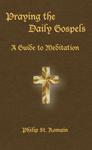
Praying the Daily Gospels: A Guide to Meditation, by Philip St. Romain, 2018 (3rd ed.) Feast of St. Joseph This year, as I reflected on the Gospel for the Solemnity of St.
Joseph, I noticed something I had somehow missed before: Joseph never speaks. Not once in the Gospels does Joseph say a word. In the infancy stories of the Gospel of Matthew, he has no recorded words at all. Others speak — angels, Mary, shepherds, kings. Joseph does not. And yet he is constantly listening. In Matthew’s Gospel especially, the pattern repeats: Joseph dreams.
Joseph rises.
Joseph does what God
asks. No speeches. Just a faithful response. He listens in the quiet language of dreams. And when he understands what God is asking, he quietly moves. He takes Mary into his home. He protects the child. He leads his small family to safety and then back again. His faith shows itself not in speeches but in steady decisions and actions. But in this solemnity, Matthew introduces him in an interesting way: “Joseph, the husband of Mary.” Not for
accomplishments or titles, but for the relationships entrusted to him: husband, guardian, father. Most of us live our lives that way, too. We are known as someone’s friend. Someone’s parent. Someone’s colleague. Someone’s neighbor. The quiet love we give in those relationships rarely makes headlines, but it shapes the world more than we realize. In truth, I suspect we remember one another by both the lives we have lived and the
relationships we have shared. Rev. Jim Caime, S.J.
Creighton Online Ministry Website
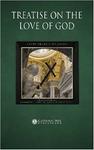
Treatise on the Love of God, by St. Francis de Sales (1567-1622) ____________ BOOK VI: OF THE EXERCISES OF LOVE IN PRAYER Chapter 15: Of the affectionate languishing of the heart wounded with love.
It is a thing very well known that human love not only wounds the
heart, but even makes the body sick unto death; because, as the passion and temperament of the body have great power to incline the soul and draw her after it, so the affections of the soul have great force to stir the humours and change the qualities of the body. But besides this, love when it is violent bears away the soul to the thing beloved with such impetuosity, and so strongly possesses her, that she fails in all her other operations, be they sensitive or intellectual; so that to feed and
second this love, the soul seems to abandon all other care, all other exercises, yea and herself too, whence Plato said that love was poor, ragged, naked, barefoot, miserable, houseless, that it lies without doors upon the hard ground, always in want. It is poor, because it makes one quit all for the thing beloved; it is houseless, because it urges the soul to leave her own habitation to follow continually him who is loved; it is miserable, pale, lean and broken down, because it makes one lose
sleep, meat and drink; it is naked and barefoot, since it makes one forsake all other affections to embrace those of the thing beloved; it lies without upon the hard ground because it causes the heart that is in love to lie open, making it manifest its passion by sighs, plaints, praises, suspicions, jealousies; it lies along at the gate like a beggar, because it makes the lover perpetually attentive to the eyes and mouth of the thing which it loves, keeping continually to the ears thereof to
speak to it and beg favours, wherewith love is never satiated; now the eyes, ears, and mouth are the gates of the soul. In fine the condition of its life is to be ever indigent, for if ever it is satiated it is no longer ardent, nor, consequently, love.
|
|
|