|
|
Please help grow this newsletter by forwarding it to others, encouraging them to sign up.
Feast of the Ephiphany The Magi humbled themselves before the unheard-of logic of God. They welcomed the Lord not the way they had imagined him to be, but as he was, small and poor.
Their prostration is the sign of those who place their own ideas aside and make room for God. It takes humility to do this.
- Pope Francis How are you being called to humility these days?
|
|
1 John 4:7-10
Psalm 72:1-2, 3-4, 7-8 Mark 6:34-44 When Jesus saw the vast crowd, his heart was moved with pity for them,
for they were like sheep without a shepherd;
and he began to teach them many things.
By now it was already late and his disciples approached him and said,
“This is a deserted place and it is already very late.
Dismiss them so that they can go
to the surrounding farms and villages
and buy themselves something to eat.”
He said to them in reply,
“Give them some food yourselves.”
But they said to him,
“Are we to buy two hundred days’ wages worth of food
and give it to them to eat?”
He asked them, “How many loaves do you have? Go and see.”
And when they had found out they said,
“Five loaves and two fish.”
So he gave orders to have them sit down in groups on the green grass.
The people took their places in rows by hundreds and by fifties.
Then, taking the five loaves and the two fish and looking up to heaven,
he said the blessing, broke the loaves, and gave them to his
disciples
to set before the people;
he also divided the two fish among them all.
They all ate and were satisfied.
And they picked up twelve wicker baskets full of fragments
and what was left of the fish.
Those who ate of the loaves were five thousand
men.
|
|
|
Reflection on the Scriptures
|
The feeding of the five thousand shows the remarkable generosity of God and his great kindness towards us. In the multiplication of the loaves and fishes we see a sign and a symbol of what God always does. When God gives - he gives abundantly. He gives more than we need for ourselves so that we may have something to share with others as well, especially those who lack what they need. God takes the little we have and
multiplies it for the good of others. Do you trust in God's provision for your life and do you freely share what you have with others, especially those who lack what they need? Lord Jesus Christ, you satisfy the deepest longings of our hearts and you feed us with the finest of wheat (Psalm 81:16). Fill me with gratitude for your blessings and give me a generous heart that I may freely share with others what you have given to
me.
|
|
|
|
|
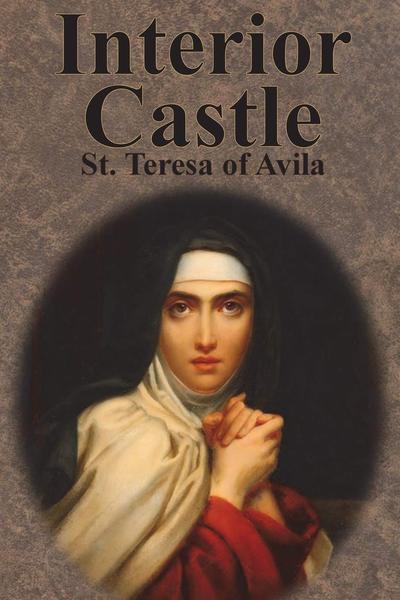
The Interior Castle (or, The Mansions), by St. Teresa of Avila Benedictines of Stanbrook translation. 1921.. Paperback, Hardcover Kindle, Audio Book.
https://amzn.to/41RmJFb THE FIFTH MANSIONS Chapter Two Continues the same subject and speaks of another kind of union which the soul can obtain with the help of God. The importance of love of our neighbour in this matter. This is very useful to read. 5. You must know that there are different kinds of sorrow: there are both griefs and joys rising from an impulse of nature or from a charity which makes us pity our neighbour,
like that felt by our Saviour when He raised Lazarus from the dead. [189] These feelings do not destroy union with the will of God nor do they disturb the soul by a restless, turbulent, and lasting passion. They soon pass away, for as I said of sweetness in prayer, [190] they do not affect the depths of the soul but only its senses and faculties. They are found in the former mansions, but do not enter the last of all. Is it necessary, in order to attain to this kind of divine
union, for the powers of the soul to be suspended? No; God has many ways of enriching the soul and bringing it to these mansions besides what might be called a short cut.' But, be sure of this, my daughters: in any case the silkworm must die and it will cost you more in this way. In the former manner this death is facilitated by finding ourselves introduced into a new life; here, on the contrary, we must give ourselves the death-blow. I own that the work will be much harder, but then it will be
of higher value so that your reward will be greater if you come forth victorious; [191] yet there is no doubt it is possible for you to attain this true union with the will of God. 6. This is the union I have longed for all my life and that I beg our Lord to grant me; it is the most certain and the safest. But alas, how few of us ever obtain it! Those who are careful not to offend God, and who enter the religious state, think
there is nothing more to do. How many maggots remain in hiding until, like the worm which gnawed at Jonas's ivy, [192] they have destroyed our virtues. These pests are such evils as self-love, self-esteem, rash judgment of others even in small matters, and a want of charity in not loving our neighbour quite as much as ourselves. Although perforce we satisfy our obligations sufficiently to avoid sin, yet we fall far short of what must be done in order to obtain perfect union with the will
of God.
|
|
|
|