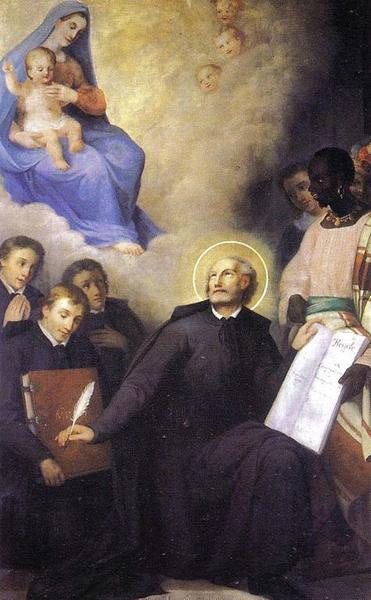
Born in the seventh century of royal blood, Saint Egwin entered a monastery, and was enthusiastically received by royalty, clergy, and the people as the bishop of Worcester, England. As a bishop he was known
as a protector of orphans and the widowed and a fair judge. Who could argue with that?
His popularity didn’t hold up among members of the clergy,
however. They saw him as overly strict, while he felt he was simply trying to correct abuses and impose appropriate disciplines. Bitter resentments arose, and Saint Egwin made his way to Rome to present his case to Pope Constantine. The case against Egwin was examined and annulled.
Upon his return to England, Egwin founded Evesham Abbey, which became one of the great Benedictine houses of medieval England. It was dedicated to Mary, who had reportedly made it known to Saint Egwin just where a church should be built in her honor.
Saint Egwin died at the abbey on December 30, 717. Following his burial many miracles were attributed to him: The blind could see, the deaf could hear, the sick were healed.